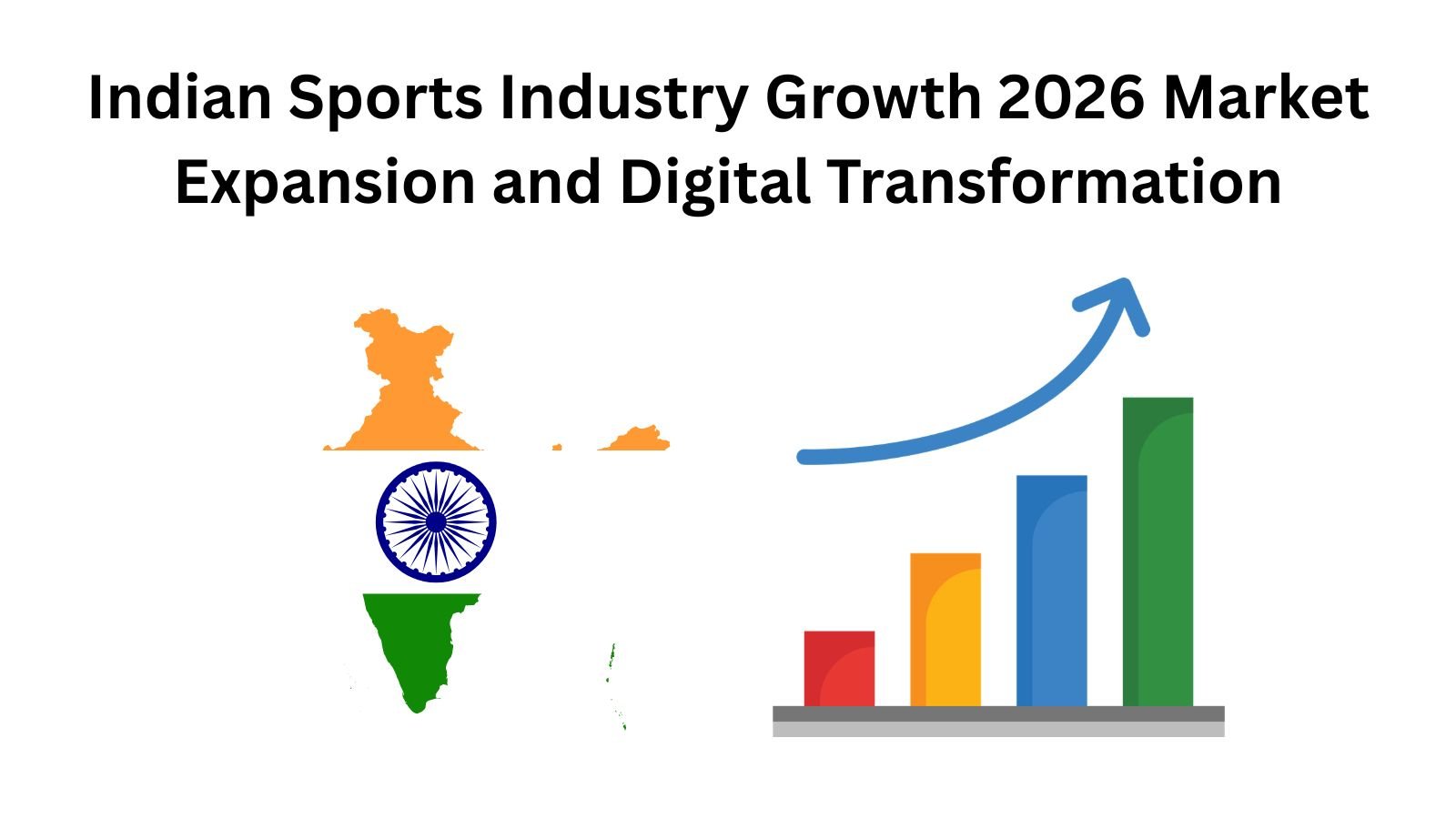
India sports industry is witnessing a historic transformation in 2026, evolving far beyond its traditional cricket centric identity into a diversified, technology driven economic sector. According to the provided information, the Indian sports market is currently valued at approximately USD 19 billion and is expanding at a compound annual growth rate of 12 to 14 percent. If this momentum continues, the industry is projected to reach an impressive USD 40 billion by 2030. The rapid growth is being fueled by increased government spending, rising private investments, expanding sports infrastructure, digital media innovation, sports technology adoption, and the emergence of new sporting ecosystems beyond cricket. As India strengthens its position in global sports, the industry is becoming a major contributor to employment, manufacturing, technology development, tourism, and media revenues.
Indian Sports Industry Enters a New Growth Phase
For decades, cricket dominated India sports economy. While cricket continues to generate the majority of sports related revenue, the overall industry is becoming increasingly diversified. The provided information highlights that India sports ecosystem is no longer limited to broadcasting rights and cricket tournaments. Instead, it is developing into a comprehensive economic engine supported by manufacturing, infrastructure development, sports technology, athlete branding, women leagues, and digital fan engagement. This transformation is creating opportunities for investors, businesses, athletes, technology companies, and sports entrepreneurs across multiple sectors.
Strong Government Support Driving Expansion
One of the most important factors behind the industry growth is unprecedented government support.
| Government Initiative | Details |
|---|---|
| Sports budget allocation 2026-27 | ₹4,479.88 crore for Ministry of Youth Affairs and Sports |
| Khelo India Mission | Revitalized program to build sports culture across the country |
| Long term objective | Help India secure top 10 position in Olympic rankings by 2036 |
The increased investment reflects a strategic shift toward systematic sports development rather than isolated event based funding.
The Rise of Multi Sport Growth Beyond Cricket
Although cricket continues to account for approximately 80 percent of total sports revenue, major growth is taking place across non cricket sports.
| Growth Area | Details |
|---|---|
| Expanding audience interest | Kabaddi, football, volleyball, combat sports attracting dedicated fan bases |
| Sponsorship growth | Non cricket sponsorship spending increased by 19 percent year on year |
This diversification reduces industry dependence on a single sport while creating new revenue channels.
The Emergence of the Athlete Economy
Athletes are increasingly becoming independent commercial brands. The traditional role of sports personalities as occasional brand ambassadors is evolving into something much larger. Athletes are now building personal brands, business ventures, digital communities, and sponsorship ecosystems. This trend is contributing to the growth of what is being described as an athlete economy.
Growth of the Live Fan Economy
Rising disposable incomes are also changing consumer behavior. Fans are increasingly prioritizing premium sports experiences, live sporting events, interactive engagement, and real time entertainment. This shift is strengthening the overall sports consumption ecosystem across India.
Major Investment Opportunities in Sports Manufacturing
Sports manufacturing has emerged as one of the most promising investment segments.
| Manufacturing Parameter | Value |
|---|---|
| Current market value | USD 6.7 billion |
| Projected value by 2030 | USD 11 billion |
| Government initiative | Made in India Sports Goods with ₹500 crore dedicated fund |
| Focus areas | Sports manufacturing, research and development, material science innovation |
Traditional manufacturing centers such as Jalandhar and Meerut are expected to benefit from growing export demand and evolving trade opportunities.
Sports Infrastructure Becoming a Major Growth Engine
Infrastructure development remains another critical pillar of industry expansion.
| Infrastructure Parameter | Value |
|---|---|
| Current infrastructure investment | USD 2.7 billion |
| Projected investment by 2030 | USD 6 billion |
The government is gradually moving away from an exclusively public funded infrastructure model. New policy frameworks aim to attract private investment through land use clarity, naming rights opportunities, and alternative revenue streams. This approach is designed to encourage long term capital participation in sports infrastructure.
Media Rights and Digital Sports Consumption
Media and technology continue to shape the modern sports economy.
- Digital streaming services are changing how sports content is consumed through OTT platforms, mobile applications, and digital live streams
- Digital advertising driven by OTT platforms and live sports is helping build a projected advertising ecosystem valued between USD 24 billion and USD 25 billion in 2026
- Media rights remain the industry largest revenue contributor, accounting for more than 42 percent of overall revenues
Sports Technology Emerging as a High Growth Sector
Technology is becoming deeply integrated into sports operations.
| Sports Technology Parameter | Value |
|---|---|
| Current market value | USD 1.6 billion |
| Projected CAGR | 15.02 percent through 2034 |
| Key growth areas | Wearable technology, AI powered performance tracking, data analytics, fantasy gaming platforms |
Technology is helping athletes, coaches, teams, and organizations make more informed decisions while enhancing fan experiences.
Future Business Opportunities in Indian Sports
The sports industry is opening several promising investment avenues.
- Sports Technology and Analytics: Performance monitoring systems, wearable devices, grassroots athlete databases, AI based coaching tools
- Women Sports Leagues: Women cricket expanding at CAGR of 23.85 percent, opportunities in women cricket franchises, women football leagues, women hockey competitions
- Sports Tourism and Grassroots Development: Multi sport complexes, regional sports academies, running and marathon events, community level sports programs
- Advanced Sports Manufacturing: High performance footwear, eco friendly athleisure products, technology integrated sports equipment
Challenges Facing the Industry
Despite strong growth prospects, several challenges remain.
| Challenge | Description |
|---|---|
| Media rights volatility | Major media rights negotiations creating uncertainty regarding long term valuation models |
| Execution and implementation risks | Success depends on implementing infrastructure projects, talent development programs, grassroots initiatives, and sports governance reforms |
What the Future Could Look Like by 2030
Based on the provided information, India sports industry is moving toward a future characterized by a USD 40 billion market size, stronger sports manufacturing capabilities, expanding women sports ecosystems, greater sports technology adoption, improved infrastructure, increased private investment, and broader participation across multiple sports. This evolution has the potential to transform sports into a major economic sector contributing to employment generation, innovation, exports, and global competitiveness.
Conclusion
The Indian sports industry in 2026 stands at a turning point. Backed by record government funding, growing private investment, expanding infrastructure, digital innovation, and increasing diversification beyond cricket, the sector is emerging as one of the country most promising growth industries. With a current valuation of USD 19 billion and projections indicating a rise to USD 40 billion by 2030, the sports ecosystem is rapidly evolving into a multifaceted economic engine. From sports technology and manufacturing to women leagues and infrastructure development, multiple sectors are contributing to this transformation. While challenges such as execution risks and media rights volatility remain, the long term outlook suggests that India sports economy is entering one of the most significant growth phases in its history.
Frequently Asked Questions
Q1. What is the current value of the Indian sports industry in 2026
A1. The Indian sports market is currently valued at approximately USD 19 billion and is expanding at a CAGR of 12 to 14 percent.
Q2. What is the projected value of the Indian sports industry by 2030
A2. If the current momentum continues, the industry is projected to reach USD 40 billion by 2030.
Q3. What was the government sports budget allocation for 2026-27
A3. The Ministry of Youth Affairs and Sports received an allocation of ₹4,479.88 crore for the 2026-27 fiscal year under the Khelo India Mission.
Q4. What is the target for sports manufacturing market by 2030
A4. The sports manufacturing market is projected to grow from USD 6.7 billion to USD 11 billion by 2030, supported by the Made in India Sports Goods initiative.
Q5. What are the future business opportunities in Indian sports
A5. Key opportunities include sports technology and analytics, women sports leagues, sports tourism, grassroots development, and advanced sports manufacturing including high performance footwear and eco friendly athleisure products.