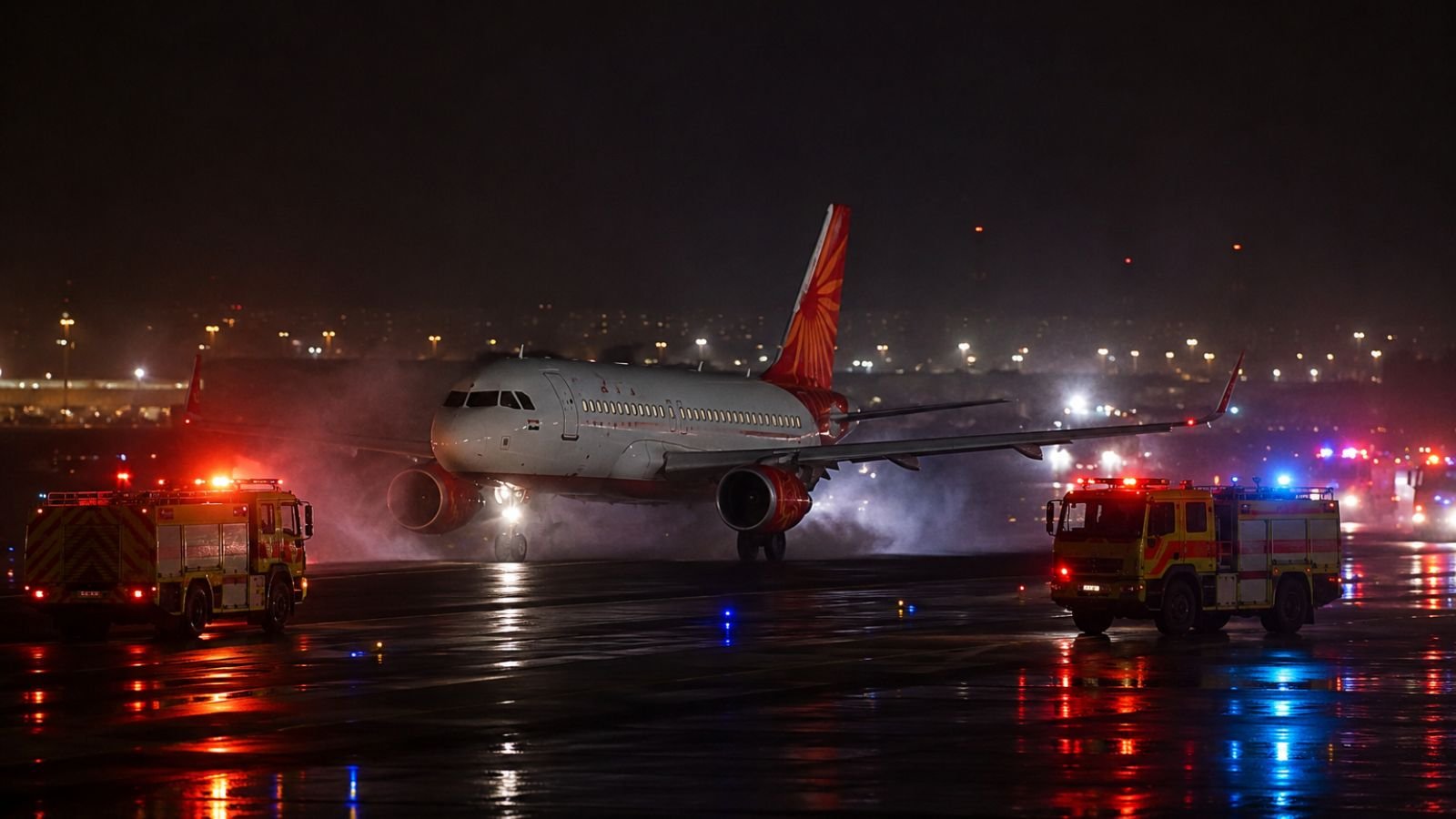
An Air India flight travelling from Bengaluru to Delhi safely carried out an emergency landing at Indira Gandhi International (IGI) Airport in Delhi on the night of May 21, 2026, after the cockpit crew reportedly received a suspected engine fire warning during the aircraft final approach. The incident involved Air India Flight AI 2802, operated using an Airbus A320 narrow body aircraft. Airport authorities immediately activated a full emergency response protocol before the aircraft landed safely on runway 29R at around 9:30 PM. According to the available information, all 171 passengers and crew members onboard remained safe, and no injuries were reported during the incident.
Air India Flight AI 2802 Emergency Landing: What Happened?
The Air India aircraft was operating a scheduled service from Bengaluru to Delhi when the crew reportedly received an engine related fire indication warning during the final stage of the flight. Sources also reported that sparks were allegedly visible in one of the aircraft engines shortly before landing.
Following the alert:
- Delhi Airport activated full emergency procedures
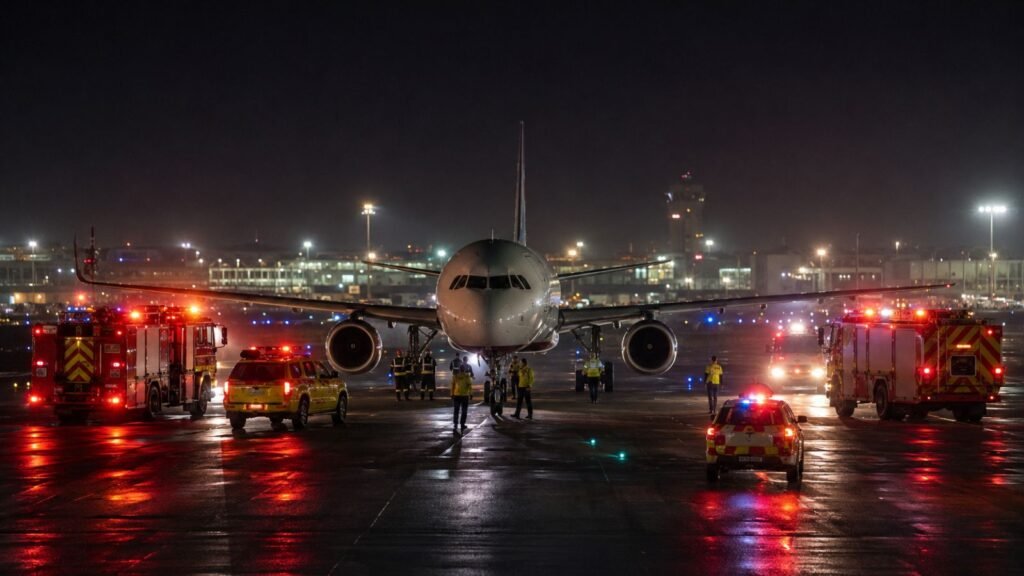
- Fire and rescue teams were deployed near the runway
- Air Traffic Control coordinated emergency landing clearance
- Runway 29R was temporarily reserved for emergency handling
The aircraft safely touched down at approximately 9:30 PM without further complications.
Key Incident Details
| Detail | Information |
|---|---|
| Airline | Air India |
| Flight Number | AI 2802 |
| Route | Bengaluru to Delhi |
| Aircraft Type | Airbus A320 |
| Emergency Trigger | Engine fire indication warning with suspected sparks in one engine |
| Passenger Safety | All 171 passengers and crew safe, no injuries reported |
| Emergency Response | Fire rescue services attended immediately, aircraft later towed for technical checks |
The successful handling of the situation helped prevent escalation and ensured passenger safety.
Full Emergency Protocol Activated at Delhi Airport
Delhi Indira Gandhi International Airport activated a full emergency protocol before the aircraft landed. In aviation operations, this type of emergency response generally involves deployment of fire engines, medical emergency standby teams, runway security clearance, air traffic management coordination, and technical inspection preparation teams. The emergency response was completed quickly after the aircraft landed safely.
Runway 29R Temporarily Suspended
Following the emergency landing, operations on Runway 29R were temporarily suspended to allow aircraft inspection, fire containment checks, safety clearance procedures, and runway examination. The temporary runway closure lasted for less than an hour. According to the operational updates provided, Runway 29R reopened safely by 10:18 PM, airport operations resumed gradually, and major disruptions across Delhi Airport were avoided. This quick restoration helped reduce the impact on other commercial flights operating during the night schedule.
DGCA and Air India Launch Technical Investigation
Air India later released an official statement confirming the incident and stating that the cockpit crew followed all standard operating procedures during the emergency. The airline, along with the Directorate General of Civil Aviation (DGCA), has reportedly started a detailed technical investigation into the incident.
Areas likely to be examined include:
- Engine warning system data
- Aircraft maintenance records
- Cockpit emergency procedures
- Possible engine malfunction causes
- Fire indication system accuracy
Technical teams will inspect the Airbus A320 aircraft before it is cleared for future operations.
Separate Air India Tail Strike Incident Reported Earlier
The emergency landing incident reportedly occurred just hours after another Air India aircraft experienced a separate tail strike incident earlier the same day. According to the provided information, Flight AI 2651 experienced a tail strike while landing at Bengaluru Airport and the return flight AI 2652 was later cancelled. Authorities indicated that both incidents were unrelated. Despite the coincidence in timing, officials clarified that the two operational issues involved separate aircraft situations.
Delhi Airport Operations Return to Normal
Airport authorities later confirmed that Delhi Airport operations had largely normalized after the emergency handling process was completed.
- Runway 29R is fully operational
- Safety inspections have been completed
- Air Traffic Control cleared pending aircraft movement
- Only minor delays were reported
Flights scheduled between 9:30 PM and 10:20 PM experienced relatively small delays ranging from 15 to 30 minutes. However, widespread cancellations or major cascading disruptions were successfully avoided.
No Major Commercial Flight Cancellations Reported
The temporary runway suspension did not result in large scale flight cancellations at IGI Airport. Airport coordination teams managed aircraft sequencing, landing schedules, departure prioritization, and air traffic bottlenecks. As a result, normal flight movement resumed soon after the runway reopened.
Passenger Safety Measures Followed Successfully
One of the most important aspects of the incident was the successful execution of emergency aviation safety procedures. The cockpit crew reportedly followed established emergency handling protocols, which likely included emergency communication with ATC, fire warning response checklists, controlled emergency descent and landing procedures, and runway emergency coordination. The safe evacuation and absence of injuries indicate that the emergency systems functioned effectively during the situation.
What Passengers Should Know
Passengers travelling through Delhi Airport after the incident were advised to monitor live flight schedules and operational updates.
- Check Flight Status: Review real time arrival and departure updates, monitor airline notifications, and verify boarding schedules before reaching the airport
- Contact Airlines Directly: Stay connected with airline support channels, monitor SMS and WhatsApp updates, and confirm gate and timing changes directly with airlines
Importance of Emergency Preparedness in Aviation
Incidents like this highlight the importance of emergency preparedness systems within modern aviation operations. Major airports and airlines maintain strict emergency handling frameworks designed to protect passengers, prevent runway hazards, manage fire related risks, and minimize operational disruption. The rapid coordination between cockpit crew, Air Traffic Control, airport emergency services, and fire rescue teams played a critical role in ensuring a safe outcome.
Airbus A320 Aircraft and Safety Procedures
The aircraft involved in the incident was an Airbus A320, one of the most commonly operated narrow body passenger aircraft used by airlines globally. Modern commercial aircraft are equipped with fire detection systems, engine monitoring alerts, emergency shutdown procedures, and advanced cockpit warning systems. These systems help pilots quickly identify potential technical problems during flight operations. In this case, the warning allowed the crew to prepare for an emergency landing before the situation escalated further.
Conclusion
The Air India AI 2802 emergency landing at Delhi Airport ended safely after the cockpit crew responded to a suspected engine fire indication during the aircraft final approach from Bengaluru. Thanks to the immediate activation of emergency procedures and coordinated airport response systems, all 171 passengers and crew members remained safe, and no injuries were reported. Although runway operations at Delhi Airport were briefly affected, authorities restored normal movement within a short period, preventing major disruptions to commercial air traffic. Air India and the DGCA have now launched a technical investigation to determine the exact cause behind the suspected engine malfunction and fire warning. The incident once again demonstrates the importance of aviation safety systems, emergency preparedness, and rapid coordination between airlines and airport authorities during critical situations.
Frequently Asked Questions
Q1. What happened to Air India Flight AI 2802?
A1. Air India Flight AI 2802 made an emergency landing at Delhi Airport on May 21, 2026, after the cockpit crew received a suspected engine fire warning during final approach from Bengaluru.
Q2. How many passengers were on board Air India Flight AI 2802?
A2. There were 171 passengers and crew members on board. All remained safe and no injuries were reported.
Q3. What type of aircraft was involved in the incident?
A3. The aircraft involved was an Airbus A320 narrow body aircraft operating on the Bengaluru to Delhi route.
Q4. Was Delhi Airport operations affected after the emergency landing?
A4. Runway 29R was temporarily suspended for less than an hour and reopened by 10:18 PM. Only minor delays of 15 to 30 minutes were reported with no major cancellations.
Q5. What action has been taken after the incident?
A5. Air India and the Directorate General of Civil Aviation (DGCA) have launched a detailed technical investigation into the engine warning system data, maintenance records, and possible engine malfunction causes.