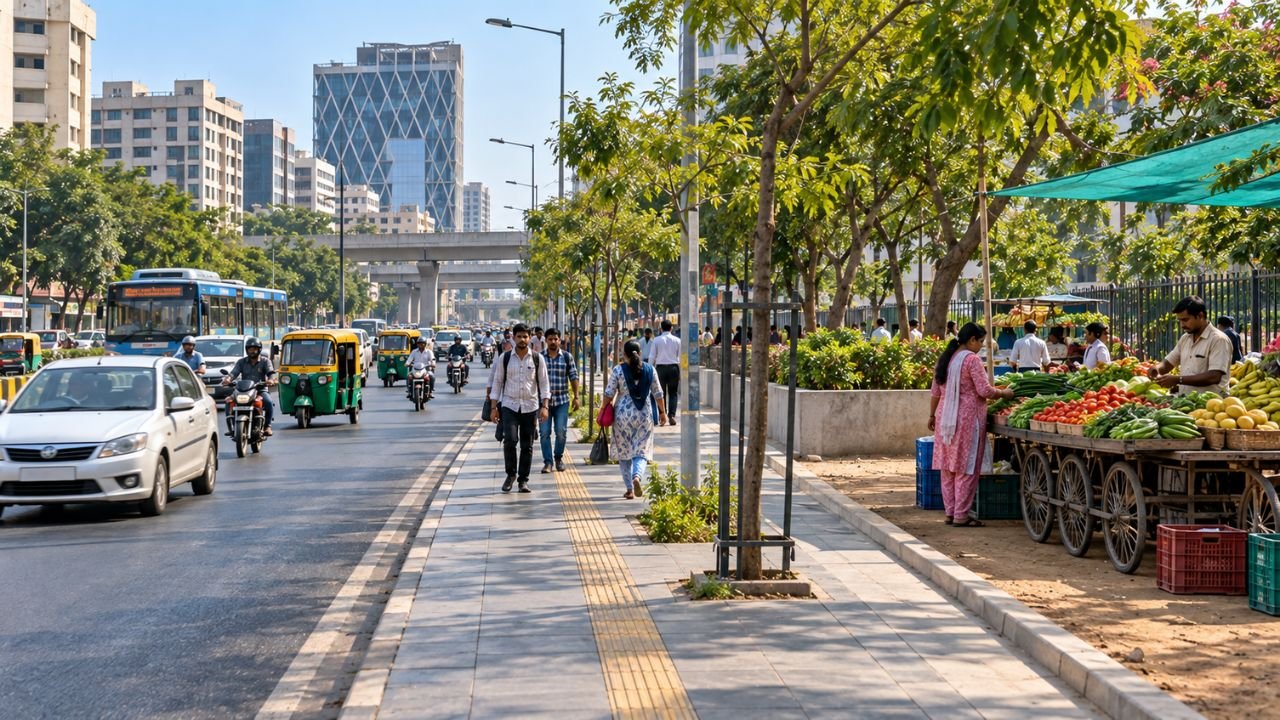
The Ahmedabad Street Vendor Ban 2026 is now in force across the city. The AMC Estate Department has banned the sale of fruits and vegetables on public roads and footpaths. The decision is part of a wider effort to ease traffic congestion, protect pedestrian space and move vending activity into authorised municipal markets. Vendors who already hold allotted stalls are expected to shift their business to these markets. Those who continue selling on roads or footpaths risk losing their carts, stock and equipment, and may also face fines. Repeat violations can invite criminal proceedings.
Why Has AMC Introduced the Ban?
The new enforcement approach rests on three concerns: traffic flow, pedestrian safety and the underuse of public market infrastructure.
Traffic Management
Roadside vending carts, locally called lorries, take up space on busy roads. When several carts park along the same stretch, the usable width of the road shrinks and traffic slows down near key junctions. The city-wide ban is meant to keep public road space free for movement.
Pedestrian Safety
Footpaths exist for people to walk safely. When vendors occupy these spaces, pedestrians are often forced onto the road. The AMC has flagged this as a safety risk and cited it as one of the reasons behind the Ahmedabad roadside vending ban.
Better Use of Public Market Facilities
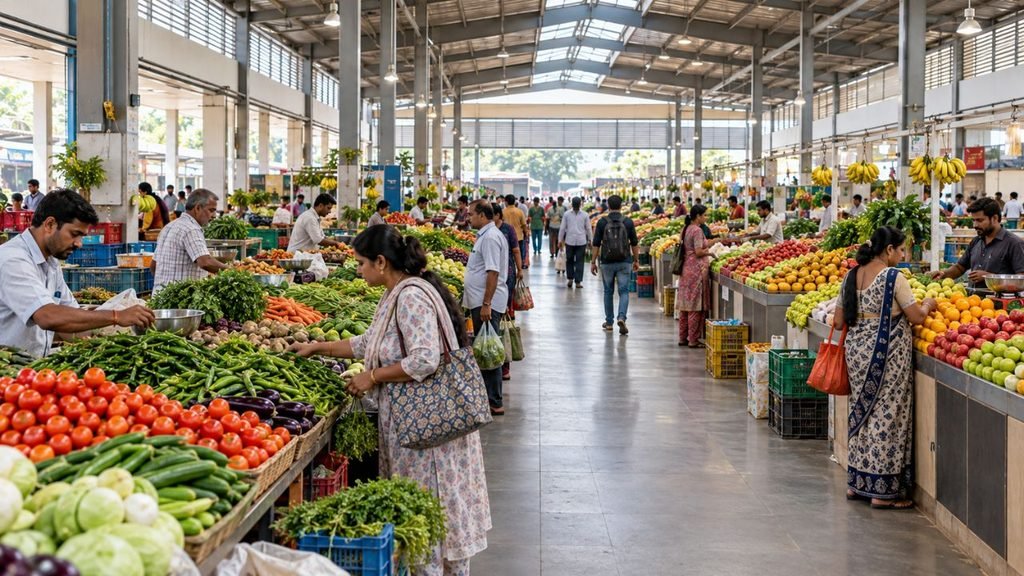
The AMC has built modern markets to house fruit and vegetable sellers in planned locations. Many of these facilities stayed empty because some vendors chose street corners with heavier footfall. The new policy is designed to bring vending activity back into these authorised municipal markets.
Vendors Are Being Moved to Designated Markets
Under the Street Vendors Act 2014, the AMC has constructed dedicated vegetable and fruit markets in different zones of Ahmedabad. These markets offer fixed locations for vendors to run their businesses. The new direction requires sellers to move into these authorised municipal markets instead of continuing on public roads and footpaths.
AMC Has Spent More Than ₹68 Crore on Market Facilities
The civic body has invested over ₹68 crore in building indoor market complexes across Ahmedabad. A large number of eligible vendors have already been given specific stalls or thadas through an official lottery. This means many sellers already hold designated spaces in the municipal market system. The current enforcement drive is directly linked to this existing infrastructure.
What Are the New Rules for Vendors?
The core rule under the Ahmedabad Street Vendor Ban 2026 is simple. Fruit and vegetable vendors cannot run their business from public roads and footpaths. They are expected to operate from authorised municipal markets. The notice also makes clear that unauthorised vending will not be allowed near the designated markets. This draws a clear line between permitted market locations and prohibited roadside or footpath vending.
Strict Enforcement Measures
The AMC Estate Department has issued a public notice outlining the consequences for vendors who continue operating on roads or footpaths. The measures include confiscation, financial penalties and criminal proceedings for repeat violations.
1. Confiscation of Vending Equipment and Stock
Vending carts, also known as lorries, can be seized. Weighing scales and the fruit and vegetable stock being sold can also be taken. Vendors who keep operating from prohibited locations stand to lose both their equipment and their goods.
2. Heavy Financial Penalties
Fines can be imposed on violators. The notice states that these penalties may be linked to the recovery of seized materials. Vendors thus face a financial hit along with the loss of their belongings.
3. Criminal Proceedings for Repeat Offenders
Repeat offenders face stronger action. The enforcement measures include filing formal police complaints and starting criminal proceedings against those who repeatedly block public pathways. This makes repeated violation a far more serious matter than a one-time offence.
Ahmedabad Street Vendor Rules at a Glance
| Issue | Details |
|---|---|
| Fruit and vegetable sales on public roads | City-wide ban |
| Fruit and vegetable sales on footpaths | City-wide ban |
| Authorised vending locations | Designated municipal markets |
| Market infrastructure | Modern indoor fruit and vegetable markets |
| AMC market investment | More than ₹68 crore |
| Stall allocation | Many eligible vendors received stalls or thadas through official lottery |
| Roadside vending carts | Can be confiscated |
| Weighing scales | Can be confiscated |
| Fruit and vegetable stock | Can be confiscated |
| Financial penalties | Applicable to violators |
| Repeat violations | Police complaints and criminal proceedings |
What Does the Rule Mean for Eligible Vendors?
Vendors who have already received stalls or thadas through the official lottery have designated locations within the municipal market network. The new enforcement approach expects them to run their business from those authorised spots instead of returning to public roads or footpaths. The aim is to move vending into organised market spaces while keeping roads and footpaths free for traffic and pedestrians.
Why Public Roads and Footpaths Are Being Cleared
The restriction ties directly to how public spaces are being used. A roadside cart takes up road space needed for traffic. A stall on a footpath cuts down the space available for pedestrians. When many vendors operate along the same busy stretch, the occupation of public space becomes hard to ignore. The AMC’s new approach aims to fix this by shifting vendors to designated market facilities.
How the Market System Supports the New Policy
The AMC has already set up indoor market complexes across different zones of Ahmedabad. The investment of more than ₹68 crore gives fruit and vegetable vendors fixed, designated spaces. The official allotment of stalls or thadas to many eligible vendors has also created an organised system for vending. The current enforcement thus combines two steps: restricting vending on public roads and footpaths, and directing eligible vendors toward authorised municipal markets.
What Happens to Vendors Who Ignore the Ban?
Vendors who keep operating on roads or footpaths can face enforcement action. The measures include:
- Seizure of vending carts or lorries
- Seizure of weighing scales
- Confiscation of fruit and vegetable stock
- Financial penalties
- Police complaints and criminal proceedings in cases of repeated violation
The enforcement approach is meant to stop unauthorised vending in public spaces.
Ahmedabad Street Vendor Ban 2026: Key Points
- The AMC Estate Department has enforced a city-wide ban on fruit and vegetable sales along public roads and footpaths
- The move focuses on traffic management and pedestrian safety
- Roadside vending carts can reduce available road space on busy stretches
- Footpath vending can reduce space available for pedestrians
- The AMC has built modern fruit and vegetable markets across different zones
- More than ₹68 crore has been spent on these indoor market facilities
- Many eligible vendors have already received stalls or thadas through an official lottery system
- Vendors are required to shift their businesses to authorised municipal markets
- Unauthorised vending is not permitted in the immediate vicinity of designated markets
- Vending carts and weighing scales can be confiscated
- Fruit and vegetable stock can also be seized
- Violators can face financial penalties
- Repeat offenders can face formal police complaints and criminal proceedings
What Vendors Need to Know
The main change is the shift from roadside and footpath vending to designated municipal markets. Vendors who already hold authorised stalls or thadas can use these market facilities to run their business. Those who continue operating from prohibited public locations can face enforcement action, including confiscation and fines. Repeated violations can lead to further legal action as described in the enforcement notice.
Conclusion
The Ahmedabad Street Vendor Ban 2026 places a city-wide restriction on selling fruits and vegetables along public roads and footpaths. The main goals are to improve traffic movement, protect pedestrian space and make better use of the municipal markets built for organised vending. The AMC has invested more than ₹68 crore in modern indoor market facilities, and many eligible vendors have already received stalls or thadas through an official lottery system. Under the new enforcement approach, vendors are expected to operate from authorised municipal markets rather than public roads and footpaths. Violations can lead to confiscation of carts, weighing scales and stock, along with financial penalties. Repeat offenders may also face formal police complaints and criminal proceedings.
Frequently Asked Questions
Q1. What is the Ahmedabad Street Vendor Ban 2026?
A1. It is a city-wide ban enforced by the AMC Estate Department on selling fruits and vegetables along public roads and footpaths in Ahmedabad.
Q2. Why has AMC introduced this ban?
A2. The ban aims to improve traffic management, protect pedestrian safety and shift vending activity to designated municipal markets.
Q3. Where should vendors operate now?
A3. Vendors are required to operate from authorised municipal markets built by the AMC across different zones of Ahmedabad.
Q4. How much has AMC spent on market facilities?
A4. The AMC has spent more than ₹68 crore on constructing indoor market complexes for fruit and vegetable vendors.
Q5. What happens if vendors continue vending on roads or footpaths?
A5. Violators can face confiscation of vending carts, weighing scales and stock, along with financial penalties. Repeat offenders may face police complaints and criminal proceedings.