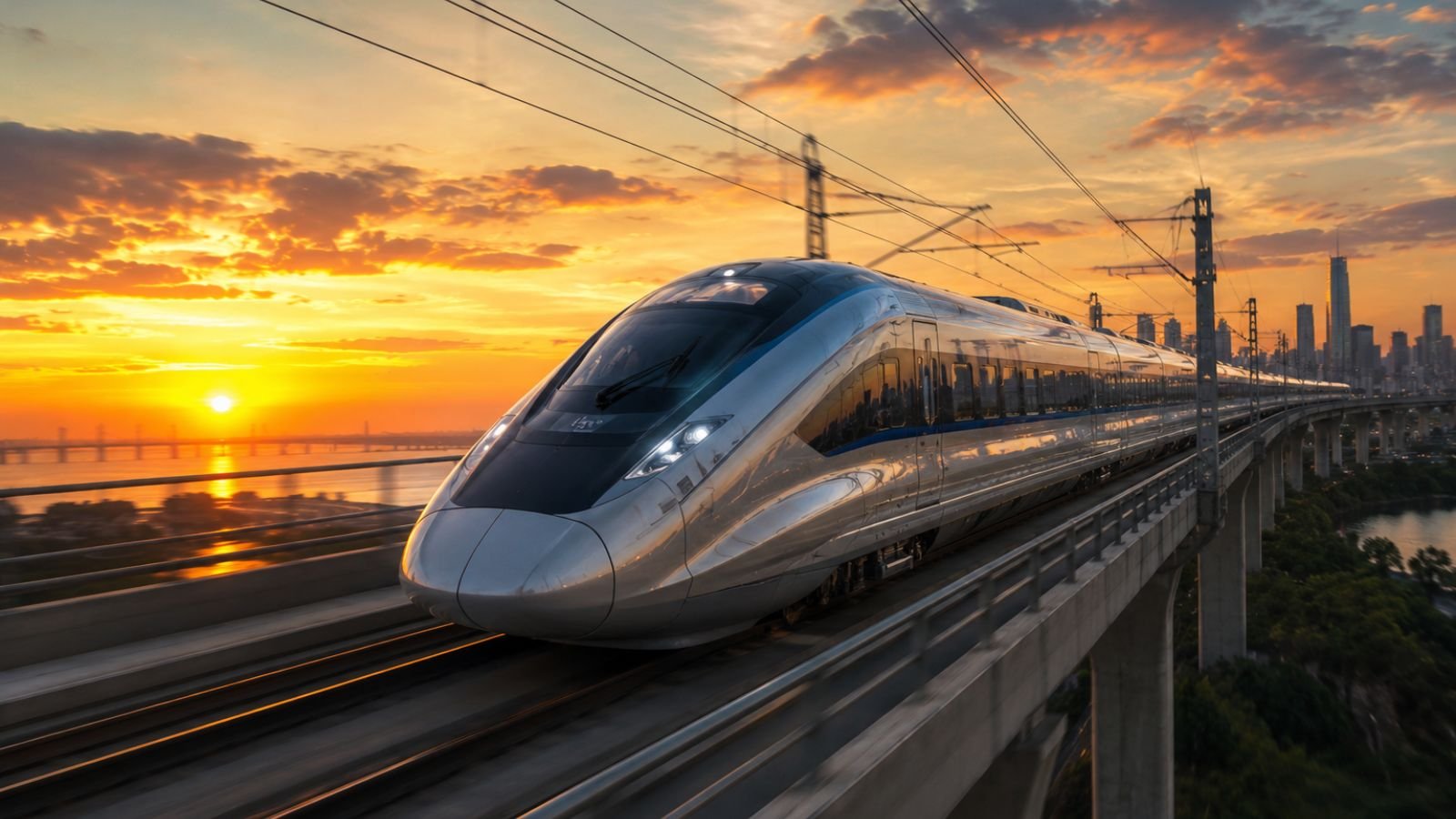
India has officially unveiled the design of its first bullet train for the Mumbai-Ahmedabad High-Speed Rail (MAHSR) corridor, marking a historic milestone in the country’s railway modernization journey. According to the provided information, the Ministry of Railways and the National High Speed Rail Corporation Limited (NHSRCL) showcased the futuristic high-speed train design that will operate on the 508-kilometer Mumbai-Ahmedabad bullet train route. The newly revealed train design was displayed publicly at Gate Number 4 of the Ministry of Railways building in New Delhi, signaling that India’s most ambitious rail infrastructure project is now moving closer to operational reality. The project is expected to completely transform long-distance travel between Mumbai and Ahmedabad by introducing ultra-fast rail connectivity capable of reducing travel time to under two hours for limited-stop services.
India’s First Bullet Train Officially Unveiled
The Ministry of Railways and NHSRCL have officially revealed the appearance and operational details of India’s first bullet train system. The train will operate on the Mumbai-Ahmedabad High-Speed Rail (MAHSR) Corridor, which stretches across 508 kilometers. The project represents India’s first high-speed rail system, one of the country’s biggest infrastructure projects, and a major transportation modernization initiative.
Bullet Train Design and Technology Details
Indigenous B28 Bullet Train Sets
The initial phase of operations will use B28 high-speed trainsets. These trains are being developed under the Make in India initiative. Manufacturing is being handled by BEML Limited, with production taking place at the Bengaluru facility. The trainsets include 8-car configurations, marking a major step toward indigenous high-speed rail manufacturing in India.
Bullet Train Speed Capability
The bullet train is designed for 320 km/h operational speed. The maximum design threshold reaches 350 km/h. Initial operational speeds may range between 250 and 280 km/h, which would make it India’s fastest train system ever introduced.
Mumbai-Ahmedabad Bullet Train Launch Timeline
The project will launch in phases. The first operational phase is expected around August 15, 2027. The initial operational stretch will cover approximately 97 km to 100 km between Surat and Vapi or Bilimora in Gujarat. This early launch section is intended to begin public high-speed rail operations before the full corridor becomes functional.
Full Mumbai-Ahmedabad Bullet Train Completion Date
The entire 508-km corridor is expected to become operational by 2029. Once fully completed, the journey between Mumbai and Ahmedabad could take under 2 hours for limited-stop services. The corridor will include 12 major stations stretching from Mumbai BKC to Sabarmati.
India’s First Undersea Rail Tunnel
One of the most significant engineering highlights of the project is India’s first undersea rail tunnel. Total underground tunnel length is 21 km, out of which 7 km runs directly beneath the seabed at Thane Creek. The undersea route was designed to protect ecologically sensitive mangrove regions and flamingo sanctuary areas near Thane Creek.
Single Massive Tunnel Design
Unlike traditional twin-tunnel systems, the MAHSR project uses a single massive tube tunnel with a tunnel diameter of 13.1 meters. This giant structure will safely accommodate both up and down high-speed tracks inside one unified tunnel system.
Tunnel Boring Machines (TBMs)
Around 16 km of the tunnel is being excavated using Tunnel Boring Machines. The TBMs feature 13.6-meter-wide cutterheads, reportedly the largest cutterhead ever deployed for a railway project in India.
Current Tunnel Construction Progress
The 5 km stretch between Shilphata and Ghansoli, constructed using the New Austrian Tunneling Method (NATM), is already largely completed. Additionally, massive 350-tonne TBM cutterheads are currently being assembled and lowered at Vikhroli for deeper excavation work.
Mumbai-Ahmedabad Bullet Train Stations
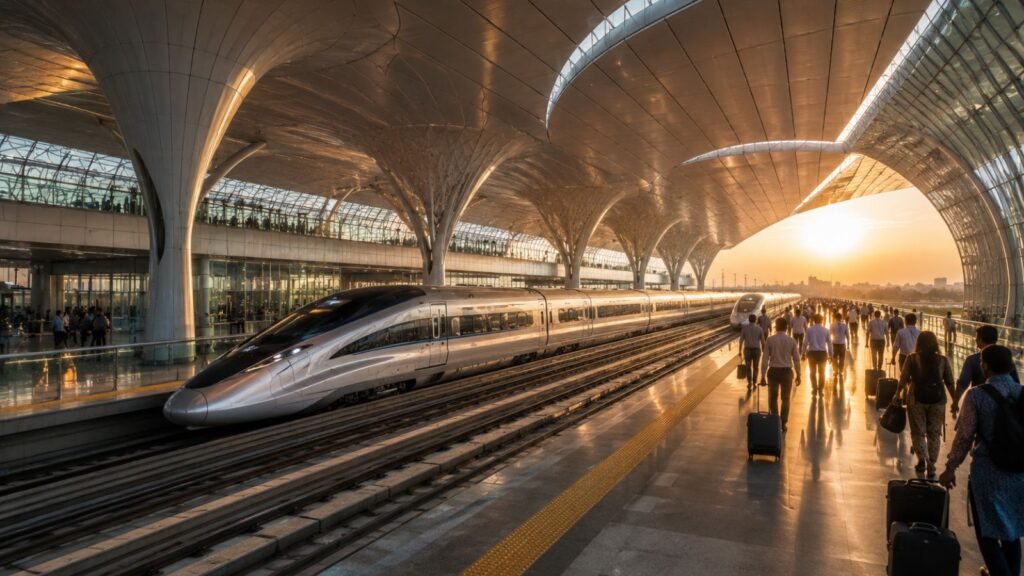
The MAHSR corridor will feature 12 state-of-the-art stations. Each station is being designed to reflect local culture, economic identity, and regional architecture. Foundation work for all 8 Gujarat stations is already 100% complete, and construction is also progressing rapidly across Maharashtra stations.
Maharashtra Bullet Train Stations
- Mumbai (BKC): The Mumbai terminus will be located at Bandra Kurla Complex (BKC). Key features include an underground station, massive three-story structure, and integration with Mumbai Metro.
- Thane Station: Located near Dombivli East, expected to serve Mumbai suburban passengers and improve regional commuter access.
- Virar Station: Will serve Palghar district, support northern Mumbai Metropolitan Region growth, and become an important suburban transit point.
- Boisar Station: The final Maharashtra station on the corridor, strategically positioned to support industrial and manufacturing activity in the region.
Gujarat Bullet Train Stations
- Vapi: First station after entering Gujarat, supporting Vapi industrial zone, Valsad region, and Daman connectivity.
- Bilimora: Located in Navsari district, designed to promote regional tourism and handicraft industries.
- Surat: Ultra-modern commercial transit hub with a station theme reflecting the diamond industry and textile sector.
- Bharuch: Positioned along Narmada River region, optimized to support industrial and chemical growth corridors.
- Vadodara: Carries cultural and educational architectural aesthetics, representing Gujarat’s educational and institutional identity.
- Anand / Nadiad: Reflects rural-growth theme, directly supporting Amul cooperative ecosystem and Kheda agricultural region.
- Ahmedabad: Located near Kalupur, integrating with Western Railway and Ahmedabad Metro network for seamless urban and intercity connectivity.
- Sabarmati: Northern terminal station including Multi-Modal Transit Terminal with rail integration, metro connectivity, and BRTS access.
Engineering and Infrastructure Significance
The Mumbai-Ahmedabad High-Speed Rail project represents a massive leap in Indian rail infrastructure. The project combines indigenous train manufacturing, high-speed engineering, undersea tunneling, integrated urban transit systems, and multi-modal transport connectivity. The corridor is expected to improve economic movement, reduce travel time, increase regional business activity, and modernize intercity transportation.
Travel Time Reduction
Once fully operational, Mumbai to Ahmedabad journey time drops dramatically. Limited-stop services are expected to complete the trip in under 2 hours, significantly faster than conventional rail travel or highway road travel.
Make in India Boost
The project also strengthens India’s manufacturing ecosystem through indigenous B28 train production, aligning with the Make in India initiative, advanced railway technology development, and domestic engineering capabilities.
Current Status of the MAHSR Project
Rapid progress is being made across tunnel works, station foundations, structural construction, and manufacturing preparation. Several major infrastructure milestones have already been completed, especially within Gujarat.
Conclusion
India’s first bullet train project is now entering one of its most important stages after the official unveiling of the train design for the Mumbai-Ahmedabad High-Speed Rail corridor. According to the provided information, the MAHSR project will feature a 508 km high-speed route, 12 advanced stations, indigenous B28 trainsets, speeds up to 320 km/h, and India’s first undersea rail tunnel. The first operational phase between Surat and Vapi or Bilimora is expected around August 15, 2027, while the full corridor is targeted for completion by 2029. With modern stations, advanced engineering, undersea tunnel construction, and ultra-fast travel capabilities, the Mumbai-Ahmedabad Bullet Train project represents one of the biggest transformations in India’s transportation history.
Frequently Asked Questions
Q1. When will India’s first bullet train become operational?
A1. The first operational phase between Surat and Vapi/Bilimora is expected around August 15, 2027, with full corridor completion targeted by 2029.
Q2. What is the designed speed of India’s first bullet train?
A2. The bullet train is designed for 320 km/h operational speed, with a maximum design threshold of 350 km/h.
Q3. What is special about the tunnel on this route?
A3. The project features India’s first undersea rail tunnel, with 7 km running beneath the seabed at Thane Creek, using a single massive tube design of 13.1 meters diameter.
Q4. How many stations will the Mumbai-Ahmedabad bullet train have?
A4. The corridor will feature 12 state-of-the-art stations – 4 in Maharashtra and 8 in Gujarat.
Q5. Who is manufacturing India’s bullet train sets?
A5. The B28 high-speed trainsets are being manufactured by BEML Limited under the Make in India initiative at their Bengaluru facility.