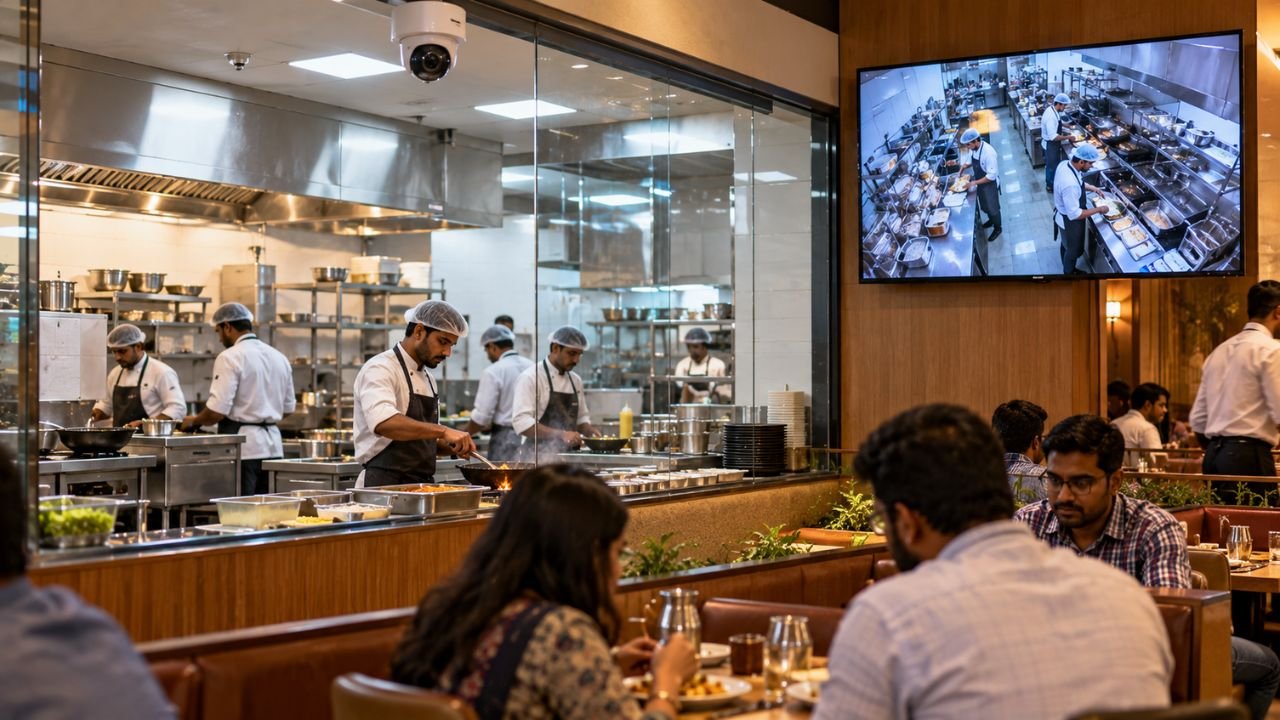
The Surat Municipal Corporation has issued a strict directive requiring hotels, restaurants, dhabas and commercial canteens across the city to install high definition CCTV cameras inside their kitchen areas. These establishments must also display the live CCTV footage on large screens or TV displays placed in customer dining areas or near counters. The measure is aimed at improving transparency and food hygiene standards while allowing customers to see how food is being prepared. This rule is being seen as one of the most direct steps taken by a municipal body in Gujarat to connect kitchen surveillance with customer visibility. For diners in Surat, this means that they can now watch what happens inside the kitchen while they wait for their food.
Live Kitchen CCTV Display Made Mandatory
Under the directive, covered food establishments must install high definition CCTV cameras inside their kitchens. The live camera feed must then be displayed on screens or televisions that customers can see from the dining or counter areas. The system is intended to give customers an opportunity to personally observe kitchen activities and improve transparency around food preparation. Establishments that fail to comply with this requirement could face penalties, which makes the live kitchen display an important operational requirement for all covered food businesses in Surat.
Barbeque Nation Controversy and the Trigger for the Directive
The policy was fast tracked following a public controversy and a viral video recorded by a customer at the Barbeque Nation outlet in Parle Point, Surat. This incident brought the issue of kitchen hygiene to the forefront and created public pressure for stronger food safety measures.
What Happened at the Outlet
According to the information provided, diners noticed a foul smell coming from mushroom dishes being served. After investigating and entering the kitchen area, customers discovered and filmed containers containing blackened, rotten potatoes and stale mushrooms that were reportedly being used by kitchen staff. The discovery shocked the diners and prompted them to record the incident on their phones.
Aftermath of the Incident
The incident led to a confrontation at the restaurant. The restaurant staff reportedly left the kitchen area, while several other dining families left their meals unfinished and walked out. The video subsequently spread across social media and led to civic intervention. The widespread attention on the incident pushed the municipal corporation to take swift action and introduce the mandatory kitchen CCTV rule.
Surat Food Safety Inspections and Penalties
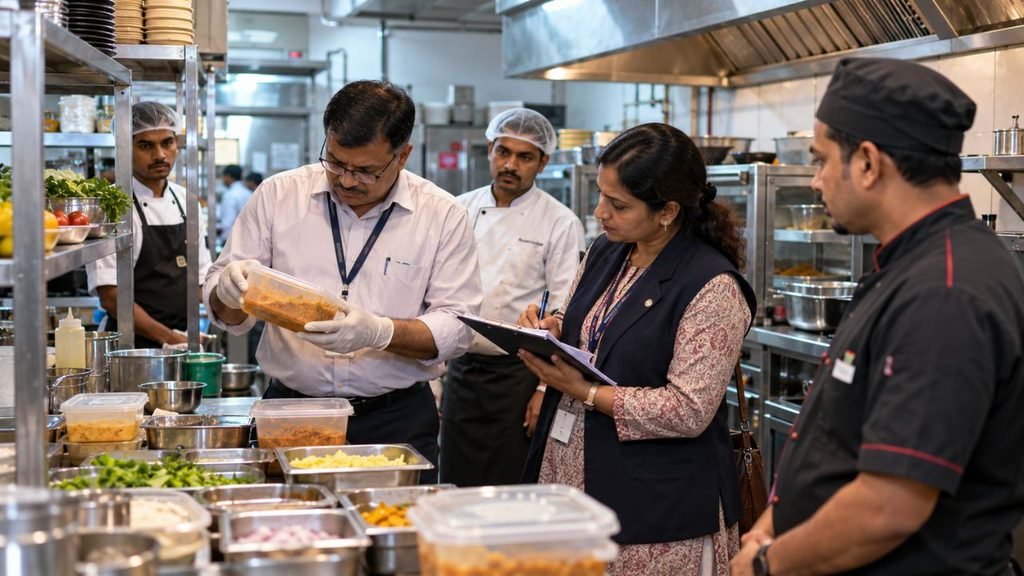
Along with the CCTV directive, the SMC Health and Food Safety Department started a multi zone inspection drive across Surat. The drive focused on identifying food safety, structural and hygiene violations across different types of food establishments.
84 Hotels and Restaurants Inspected
During the initial inspections, food safety teams inspected 84 hotels and restaurants. The teams destroyed 193.5 kg of unfit and contaminated food items on the spot. The inspections also resulted in:
- ₹2,77,100 collected in spot fines
- Statutory notices issued to 54 eateries
- Notices related to various structural and hygiene deficiencies
These inspections showed that the civic body was serious about enforcing food safety standards and was willing to take action against establishments that failed to meet the required hygiene levels.
Penalties for Not Displaying Live CCTV Footage
SMC officials have warned that establishments operating without a functional, customer facing live CCTV feed can face heavy financial penalties. The information also states that continued violations can lead to cancellation of the food business licence. This makes the live kitchen display an important requirement for the covered food establishments. Restaurant owners should treat this as a mandatory compliance requirement rather than an optional upgrade.
WhatsApp Complaint Helpline
The SMC has also shared a dedicated WhatsApp Chatbot helpline: 63599 30020. Customers can use the helpline to file complaints if:
- An eatery does not display its live kitchen screen
- Food quality is suspected to be poor
The system is intended to provide customers with a way to raise concerns directly. This gives diners a direct channel to report violations without having to visit a municipal office in person.
Wider Food Safety Measures in Gujarat
The Surat initiative is part of a broader push for food safety measures in Gujarat.
Ahmedabad
The Ahmedabad Municipal Corporation had previously ordered more than 11,000 restaurants, food courts and cloud kitchens to stream live kitchen feeds near their reception and seating areas. This shows that the live kitchen concept is gaining traction across major cities in Gujarat.
Bhavnagar
The Bhavnagar District Administration also passed an order giving urban and rural food businesses a 30 day window to set up kitchen surveillance under the Food Safety and Standards Regulations. The move in Bhavnagar indicates that smaller cities are also adopting similar measures to improve food safety standards.
Why the Surat CCTV Rule Matters
The new requirement connects kitchen surveillance with customer visibility. Instead of keeping kitchen activities separate from the dining area, covered establishments are required to make the live footage visible to customers. The stated objectives include:
- Greater transparency
- Improved food hygiene standards
- Customer visibility of food preparation
- Faster identification of food quality concerns
- Stronger monitoring of food establishments
For customers, this means they can see how their food is being prepared and raise concerns immediately if they notice something wrong. For restaurants, this creates a stronger incentive to maintain high hygiene standards at all times.
Surat CCTV Kitchen Rule 2026: Key Points
| Detail | Information |
|---|---|
| Issuing Authority | Surat Municipal Corporation |
| Establishments Covered | Hotels, restaurants, dhabas and commercial canteens |
| CCTV Requirement | High definition cameras inside kitchens |
| Display Requirement | Live footage on customer facing screens |
| Initial Inspections | 84 hotels and restaurants |
| Contaminated Food Destroyed | 193.5 kg |
| Spot Fines | ₹2,77,100 |
| Statutory Notices | 54 eateries |
| Complaint Helpline | 63599 30020 |
Conclusion
The Surat CCTV Kitchen Rule 2026 requires hotels, restaurants, dhabas and commercial canteens to install high definition CCTV cameras inside their kitchens and display the live footage for customers. The directive comes alongside inspections by the SMC Health and Food Safety Department, which inspected 84 establishments, destroyed 193.5 kg of unfit and contaminated food items, collected ₹2,77,100 in spot fines and issued notices to 54 eateries. The new system is focused on making kitchen activities more visible to customers while strengthening transparency and food hygiene monitoring across Surat. For restaurant owners, this is now a compliance requirement. For customers, it is a step toward greater confidence in the food they eat.
Frequently Asked Questions
Q1. What is the Surat CCTV Kitchen Rule 2026?
A1. It is a directive by the Surat Municipal Corporation requiring hotels, restaurants, dhabas and commercial canteens to install high definition CCTV cameras inside kitchens and display live footage to customers.
Q2. Why was this rule introduced in Surat?
A2. The rule was fast tracked after a viral video from a Barbeque Nation outlet in Surat showed rotten potatoes and stale mushrooms being used in the kitchen. The incident created public pressure for stronger food safety measures.
Q3. What penalties can establishments face for not displaying live kitchen footage?
A3. Establishments operating without a functional customer facing live CCTV feed can face heavy financial penalties, and continued violations can lead to cancellation of the food business licence.
Q4. How many establishments were inspected during the SMC drive?
A4. Food safety teams inspected 84 hotels and restaurants, destroyed 193.5 kg of unfit and contaminated food items, collected ₹2,77,100 in spot fines and issued statutory notices to 54 eateries.
Q5. How can customers file a complaint about kitchen hygiene in Surat?
A5. Customers can use the dedicated WhatsApp Chatbot helpline at 63599 30020 to file complaints if an eatery does not display its live kitchen screen or if food quality is suspected to be poor.